What Is Probate in Alberta?
Probate is the legal process of having the Alberta Court of King’s Bench formally recognize a Will and confirm the authority of the Personal Representative (also called the executor).
When the Court grants probate, it issues a document called a Grant of Probate. This document gives the executor legal authority to:
- Access bank accounts
- Sell or transfer real estate
- Deal with investment accounts
- Collect assets
- Pay debts and taxes
- Distribute the estate to beneficiaries
Financial institutions will often refuse to release assets without a Grant of Probate, particularly when the estate is large or there is risk of dispute.
If there is no Will, the court issues a Grant of Administration, appointing an administrator to perform the same role.
When Is Probate Required?
Not every estate in Alberta requires probate.
Probate is typically required when:
- The deceased owned real estate solely in their name
- Financial institutions demand a Grant of Probate
- There are significant assets without named beneficiaries
- There is potential for dispute among beneficiaries
- The Will is being questioned
Probate may not be required if:
- All assets were jointly owned with right of survivorship
- All accounts had designated beneficiaries (e.g., RRSPs, TFSAs, life insurance)
- The estate is very small
The difficulty is that many families assume probate is optional — only to discover that banks or land titles offices will not proceed without a court order.
An early legal review can save weeks — sometimes months — of delay.
What Does an Executor Actually Do?

Being named as executor is an honour. It is also a serious legal responsibility.
Executors have fiduciary duties. That means they must act honestly, diligently, and in the best interests of the beneficiaries. Mistakes can result in personal liability.
The executor’s responsibilities generally include:
- Locating the original Will
- Arranging funeral and burial
- Securing estate assets
- Identifying beneficiaries
- Valuing property and investments
- Applying for probate if required
- Filing final tax returns
- Paying debts and liabilities
- Distributing the estate
Estate administration in Alberta is rarely as simple as “reading the Will and dividing the money.” Even straightforward estates involve tax filings, accounting obligations, and statutory timelines.
In more complex estates — especially those involving businesses, farms, rental properties, or blended families — professional guidance becomes essential.
The Probate Process in Alberta
The probate process in Alberta is document-intensive and procedural. It requires compliance with the Surrogate Rules and filing a detailed application with the Court.
The application typically includes:
- The original Will
- An affidavit from the executor
- A detailed inventory of assets and liabilities
- Notices to beneficiaries
- Notices to next of kin
Accuracy matters. Errors can result in rejection by the Court and costly delay.
Once filed, the Court reviews the application. If approved, it issues a Grant of Probate. Processing times vary, but typically range from several weeks to several months depending on court volume.
Only after the Grant is issued can certain estate assets be accessed or transferred.
Probate Fees in Alberta
Alberta has one of the lowest probate fee structures in Canada.
Probate fees are based on estate value and are capped at relatively modest amounts compared to provinces like Ontario or British Columbia.
That said, probate fees are often the smallest expense in estate administration. Legal fees, accounting fees, real estate costs, and tax liabilities can significantly exceed the court filing fee.
Attempting to avoid probate at all costs can sometimes create greater legal risk than the probate fee itself.
Estate Administration Without a Will (Intestacy)

If someone dies without a Will in Alberta, they are said to have died “intestate.”
In that case, Part 3 of the Wills and Succession Act governs how the estate is distributed.
The distribution depends on:
- Whether there is a surviving spouse or adult interdependent partner
- Whether there are children
- Whether children are from the same relationship
- Whether there are surviving parents or siblings
Blended families often face unexpected results under intestacy rules. A surviving spouse does not always receive everything.
When there is no Will, someone must apply to court for a Grant of Administration. This process is more complicated than probate of a valid Will.
Tax Obligations During Estate Administration
One of the most misunderstood aspects of estate administration is tax.
Canada does not have an inheritance tax. However, when a person dies, they are deemed to have disposed of their assets at fair market value. This can trigger significant capital gains.
The executor must:
- File a final T1 tax return
- Potentially file a return for rights or things
- Possibly file trust returns for the estate
- Obtain a CRA Clearance Certificate before final distribution
Distributing estate assets without resolving tax obligations exposes the executor to personal liability.
This is an area where legal and accounting coordination is critical.
Executor Liability and Disputes
Executors are often family members — not professionals.
They may be managing sibling dynamics, emotional tension, and unclear estate instructions.
Common estate administration disputes include:
- Allegations that the executor is delaying distribution
- Claims that estate assets were undervalued
- Disputes over executor compensation
- Challenges to the validity of the Will
- Family Maintenance and Support Act claims
Estate litigation can significantly delay administration and increase costs.
Proactive legal advice at the beginning of the process can often prevent disputes before they escalate.
How Long Does Probate Take in Alberta?
There is no universal timeline.
Simple estates may take six to twelve months to complete. More complex estates — especially those involving property sales, tax issues, or disputes — can take significantly longer.
Beneficiaries often expect immediate distribution. In reality, prudent administration requires patience and compliance with legal obligations.
Rushing distribution is one of the most common executor mistakes.
Can Probate Be Avoided?

With proper estate planning, some assets can pass outside of probate.
Common strategies include:
- Joint ownership with right of survivorship
- Designated beneficiaries on registered accounts
- Trust structures
- Corporate reorganization
However, probate avoidance must be approached carefully. Joint ownership can create unintended tax consequences, expose assets to creditor risk, or create disputes among children.
Avoidance should be strategic — not reflexive.
When Should You Speak to a Probate Lawyer?
You should consult an estate lawyer if:
- You have been named executor and are unsure where to begin
- The estate includes real estate, businesses, or farms
- There are strained family relationships
- Someone is threatening to challenge the Will
- The estate is insolvent
- You are concerned about executor liability
Even in seemingly straightforward estates, early advice can prevent costly errors.
Probate & Estate Administration in Edmonton
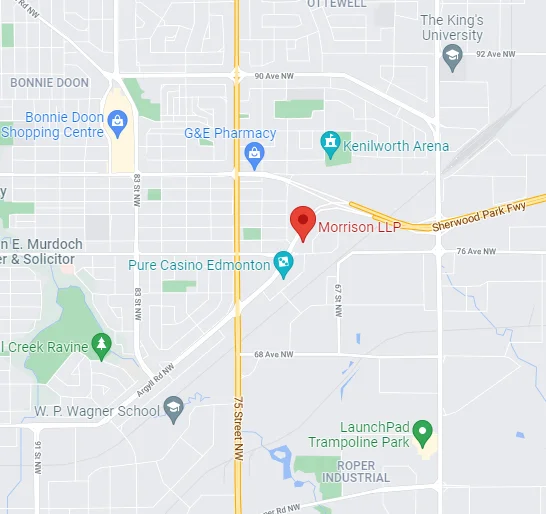
At Morrison LLP, we advise executors, administrators, and beneficiaries throughout Edmonton and northern Alberta.
We assist with:
- Probate applications
- Estate administration guidance
- Executor advice
- Tax coordination
- Estate disputes and litigation
- Will challenges
- Dependent support claims
Our role is to provide clarity during a period of uncertainty — and to ensure that the estate is administered properly, efficiently, and lawfully.
Speak with an Edmonton Probate Lawyer
If you have lost a loved one and are unsure what steps to take next, we are here to help.
Call 587-758-1099 to schedule a consultation with an Edmonton estate lawyer.
Probate and estate administration do not need to be overwhelming. With proper guidance, the process can be handled carefully and professionally — allowing families to focus on what truly matters.